- New Classical Guitar
- Posts
- Issue 38
Issue 38
In this issue: Marcin Dylla in our YouTube find, album of the week by Nina Golubović, sheet music in our morning-routine with Leon Albert, know-how with Johannes Erkes & Thomas Jahn (Guitar Festival "Saitensprünge") and the feel-good tune of the week with The Favors
Hey!
Welcome to the thirty-eighth edition of our newsletter and the first in the year two thousand and twenty-six. We hope you all enjoyed your respective Januaries. The year is slowly picking up speed again. And us? We're back from our winter break and once again on the lookout for inspiration from the world of guitar, arriving in your inbox every two weeks.
We’re starting off a little heartwarming, a little poetic, a little magical. The first characteristic fits our video of the week with Marcin Dylla, the second matches our album of the week by Nina Gulobovic, and the last is the keyword for all the concerts you're playing or attending this year.
But magic is also the theme of this week's (double) interview. Today, we're switching perspectives for the first time, with some very exciting answers and insights from two of the organizers of the Bad Aibling Guitar Festival.
Good news from the sheet music category: we have been able to keep Leon Albert on board for another season! And that makes perfect sense because, like no other, he understands how to change perspective thematically and technically at any time, providing us all with exclusive and exquisite études again this year and answering our question “What's the routine this week?” with his signature style between irony and poetic depth.
Enjoy reading,
Stefan and Willi
YOUTUBE FIND OF THE WEEK
with Marcin Dylla
Looking for something heartwarming during the cold season. Looking for a soulful sound for the new year. Looking for musical beauty that inspires. We found what we were looking for and ended up, without much detour, at Francisco Tarrega’s doorstep. The four mazurkas Mazurka en Sol, Marietta, Adelita, and Sueño should be familiar to many. But the great thing is that you always find different approaches in interpretive music, and then, in the best case, you'll say from time to time: Wow, I've never heard it like that before. So here you have all four mazurkas in one video.
We think that regardless of aspects such as phrasing, sound, you name it, the way the pieces breathe here is so phenomenally captivating that the other aspects are simply accepted as a given. As always, everything plays together naturally. Heartwarming? Good for the soul? Musical beauty? Check. Check. Check.
Oh, and which performer are we writing about here?
Marcin Dylla.
Any questions? No?
Be sure to check it out!
ALBUM OF THE WEEK
with Nina Golubović
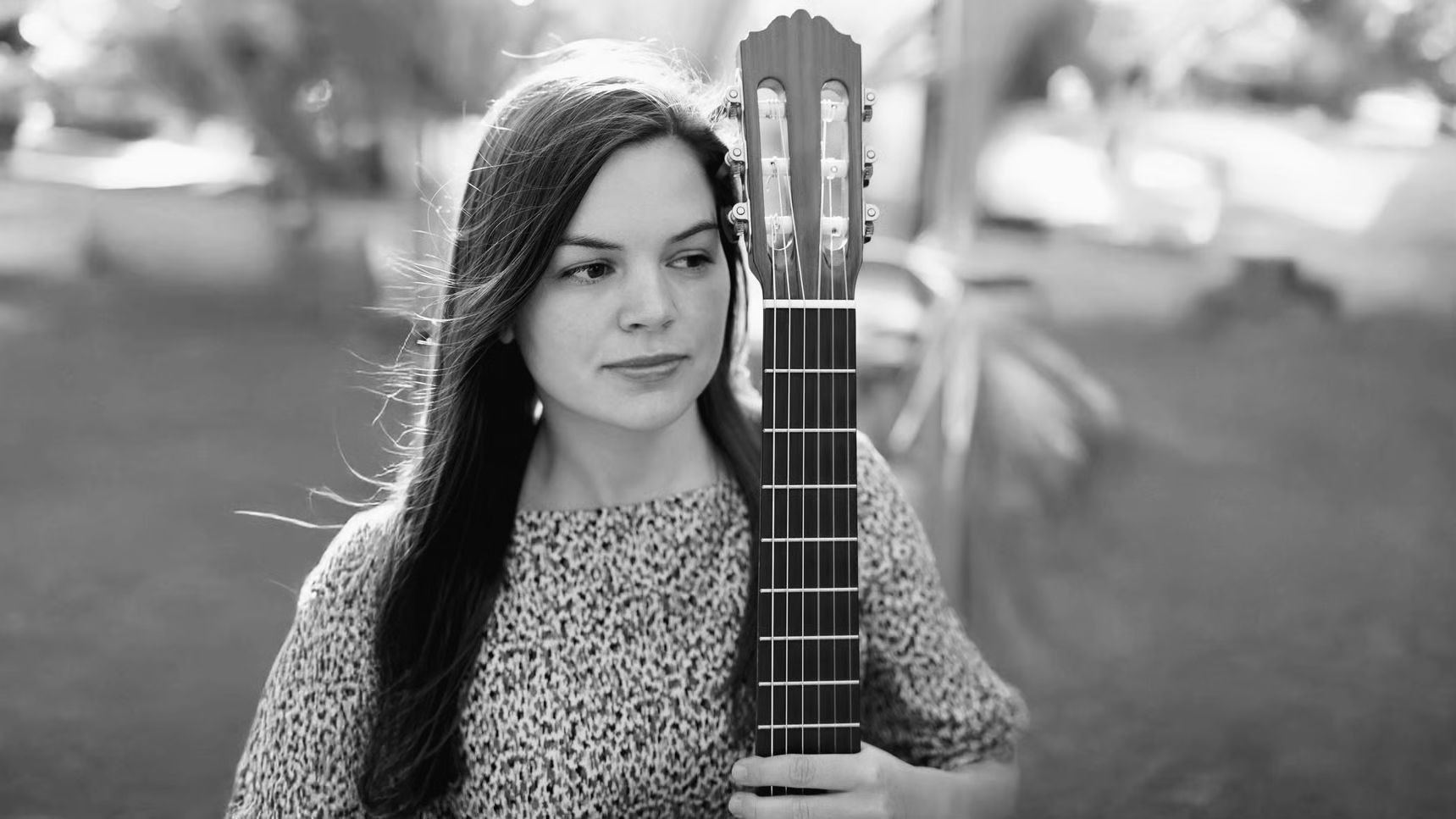
What do you think about traveling through Andalusia with a donkey? Lonely, hilly landscapes, scattered farms, unspoiled nature. Connecting with the terrain, with yourself, and hoping that your companion won’t live up to its reputation for stubbornness.
We cautiously assume that the young guitarist Nina Golubović has given this question some thought. In her first release, she focuses on a classic of Spanish literature called Platero y yo (Platero and I). In it, author Juan Ramón Jiménez (1881–1958) embarks on a poetic journey with the donkey Platero, which revolves around a utopia of harmonious coexistence. Based on this story (written between 1907 and 1916), Spanish composer Eduardo Sainz de la Maza composed the suite of the same name, Platero y yo.
Nina's interpretation of this story really moved us. She tells the story in an unmistakable yet unobtrusive way. Clear in tone, warm and cozy, intimate and yet, or perhaps precisely because of this, convincing.
To set the mood for the suite, Nina opens her album with three pieces each from Diez canciones populares catalanas by Miguel Llobet and the Bardenklänge by J.K. Mertz.
Have a good journey!
MORNING-ROUTINE
A coffee with Leon Albert

Hi Leon, what’s the routine for this week?
Openness.
INTERVIEW
When does a festival evening become magical?
©AIB-KUR Bad Aibling
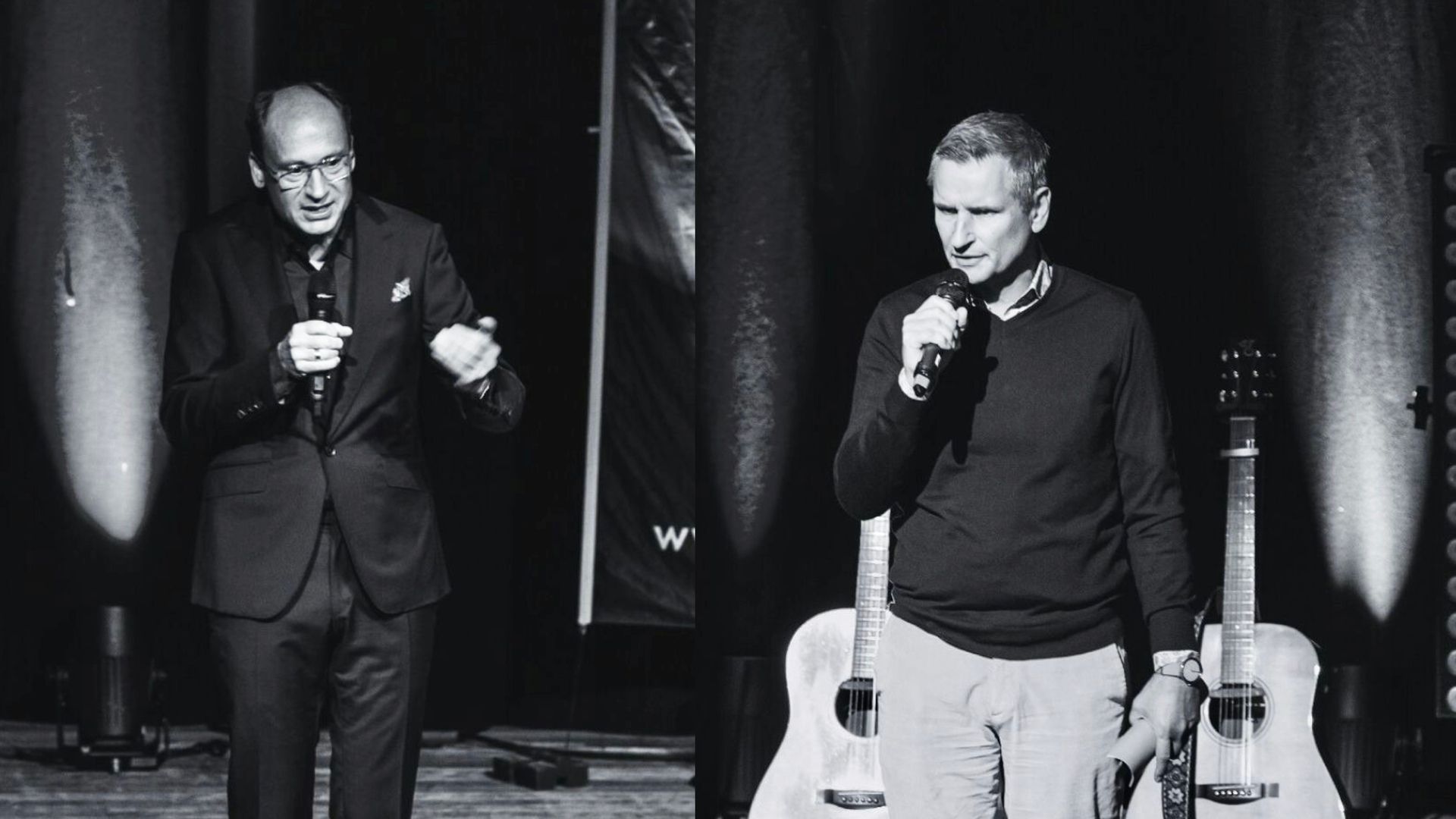
With Johannes Erkes & Thomas Jahn from the Saitensprünge Guitar Festival Bad Aibling
In the first 37 editions, we focused pretty closely on topics that directly affect guitarists: technique and sound, tremolo and practice strategies, recording and mastering, online lessons, competitions and youth work, DIY tours and self-organization. We also addressed the question of how to train young musicians today and what is currently changing in teaching and at universities. Many perspectives, often very hands-on. Now let's look in the other direction.
Because somewhere, all of this needs to come together, become visible, take place. On stages, in halls, in a program that attracts and carries people. This requires people who curate, calculate, plan, discard, rebuild, and ultimately ensure that ideas turn into concert evenings. At the Saitensprünge Festival, these people are artistic director Johannes Erkes and organizer Thomas Jahn. We wanted to know where they start when creating a new program, how they achieve variety and recognition, and how you can tell that the audience and the music really come together during an evening. We also asked them what has worked best for them in attracting new and young audiences, and what ideas they are working on for the coming years. And, as always, we end with our poster question.
Hi! When you curate a festival program, what is the first thing you do before you start thinking about specific artists?
Johannes Erkes, Artistic Director: The quality of the artists is our top priority. After that, it's all about the mix. Saitensprünge is a colorful festival; we want to cater to many different genres, captivate our audience, and entertain them.
Thomas Jahn, Organizer: This always requires looking back, i.e., do we want to invite artists who have already performed with us before, and how do they fit into our theme for the next festival?
How can you tell that an evening is truly magical? What is a good indicator for you that the audience and the music are really coming together?
Johannes: You can feel it in the hall, the silence, the tension, the applause.
Thomas: I remember Brother Dege's first concert. By the end of the concert, everyone was on their feet. There was an incredible dynamic between the artists on stage and the audience in the hall – a new experience for us as organizers and also for the audience.
When you think about younger or new audiences, what has worked best for you in getting people interested who wouldn't normally automatically gravitate towards classical guitar music?
Johannes: We always have a special concert for very young listeners in our program. This is how we motivate our audience of tomorrow.
Thomas: Another great opportunity is “Guitarrissimo – the long night of guitars.” Four or five musicians, soloists, or groups from different genres each play a “short” and a “long” set. This adds up to around 4 hours of music. It's hugely varied, entertaining and perfect for audiences who want to experience the instrument and the diversity of music!
What makes guitar festivals sustainable for you? Is there anything you definitely want to try out or expand on in the coming years?
Johannes: We also need the big names to remain competitive. This has an impact on political support, sponsors, and, of course, ticket sales.
Thomas: In 2025, we celebrated the festival's 25th anniversary. We want to continue on the path we have chosen, i.e., presenting high-quality musicians and an excitingly diverse program. In doing so, we must always maintain a balance between attractiveness and economic viability. If we succeed in this, we will also celebrate the 50th festival.
Imagine you could have one sentence printed on a poster to be put up in huge numbers at all the (classical) music festivals in the world. What sentence would that be?
Johannes, Thomas: Close your eyes and listen…
For more infos about the “Saitensprünge” Guitar Festival visit:
https://www.saitenspruenge.com/
https://www.bad-aibling.de/
FEEL-GOOD TUNE OF THE WEEK
with The Favors
Whether it’s between rehearsals and lessons, after practicing, before a concert, or whenever you need it: put on your headphones, take a break from the noise, and feel good.
Our feel-good tune of the week!
OUTRO
Thank you for reading! Please send any suggestions or comments directly in response to this issue. In the next issue – spoiler alert – there will be an exciting report on guitar making.
New music discoveries – including from artists we wrote about in today's issue – can be found, as always, in our Spotify playlist for the newsletter, which we've linked below.
Be kind to one another.
Stay tuned!
Stefan & Willi
supported by


New Classical Guitar is a newsletter by Willi Leinen and Stefan Degel from TMBM. You can find our music and more information about our journey at http://t-m-b-m.com/.
On Spotify, we curate a playlist with our favorite pieces. Feel free to follow our New Classical Guitar Playlist at https://open.spotify.com/playlist/3ZwxJRAsW9Zs2JiS2eLy6a?si=9b2a737f01c043a4 and recommend new additions.